MERCRUISER 98-8M108208 Mercuruiser Error 98-8M0108208
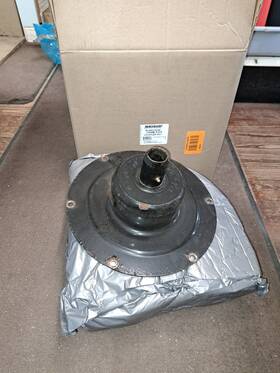
( Brand: Mercruiser ), ( Manufacturer Part Number: 98-8M108208 ), ( Stroke: 4-stroke ), ( Engine Hp : 496 / 8.1 Mpi Sterndrive )
Review MERCRUISER Mercuruiser Used Replaced In Error By Shop
The **Mercruiser 98-8M108208** and **98-8M0108208** are critical components of the **Mercruiser 98 Series** marine steering and control systems, specifically designed for mid-sized boats and yachts equipped with **Mercruiser Alpha Drive** or **Mercruiser Alpha II** propulsion systems. These units serve as **steering control modules**, functioning as the central brain for the hydraulic or electric steering mechanisms, ensuring precise and responsive maneuverability while maintaining reliability in demanding marine environments. The **98-8M108208** and **98-8M0108208** are part of a **fail-safe, redundant control system** that integrates with the boat s **joystick, wheel, or tiller linkages**, translating pilot input into hydraulic or electric signals that adjust the steering angle of the drive units. Both models are engineered with **high-grade, corrosion-resistant materials** to withstand prolonged exposure to saltwater, humidity, and temperature fluctuations, making them ideal for both freshwater and saltwater applications.
At the heart of these control modules lies **advanced electronic circuitry**, including **microprocessor-based logic** that processes steering commands, monitors system status, and communicates with other onboard systems such as the **Mercruiser Alpha Drive s electronic control units (ECUs)** or **optional autopilot interfaces**. The **98-8M108208** and **98-8M0108208** feature **self-diagnostic capabilities**, allowing them to detect faults such as **hydraulic pressure loss, electrical malfunctions, or mechanical binding**, which are then relayed to the boat s **instrument panel or diagnostic port** via **trouble codes** for troubleshooting. This built-in diagnostics system enhances **maintenance efficiency** by pinpointing issues before they escalate, reducing downtime and potential steering failures during critical operations.
One of the defining characteristics of these steering control modules is their **modular and adaptable design**, allowing them to be easily integrated into a variety of **Mercruiser propulsion setups**, including **single and twin Alpha Drive configurations**. The **98-8M108208** and **98-8M0108208** are compatible with **both hydraulic and electric steering systems**, providing flexibility for boat owners who may upgrade or modify their rigging over time. Additionally, these units are **backward and forward compatible** with other **Mercruiser 90 Series and 98 Series components**, ensuring seamless integration with existing marine electrical and hydraulic systems. The **robust wiring harnesses** and **high-quality connectors** are designed to minimize signal interference, ensuring **consistent and reliable operation** even in the presence of electrical noise from other onboard systems.
For boaters who prioritize **performance and precision**, these steering control modules deliver **smooth, responsive steering** with minimal lag, enhancing overall handling and control particularly valuable in **high-speed cruising, tight docking maneuvers, or rough sea conditions**. The **fail-safe mechanisms** built into the **98-8M108208** and **98-8M0108208** ensure that if a primary control signal fails, the system can **default to a secondary steering mode** or **emergency override**, preventing complete loss of steering capability. This redundancy is particularly crucial for **long-distance cruisers, fishing vessels, or commercial applications** where reliability is non-negotiable.
When it comes to **installation and maintenance**, these steering control modules are designed with **boatbuilders and marine technicians in mind**, featuring **clear labeling, accessible mounting points, and straightforward wiring diagrams**. While the units themselves are **sealed against water ingress**, routine **electrical inspections, hydraulic fluid checks, and software updates** (if applicable) are recommended to maintain optimal performance. Replacement of these components is typically a **straightforward process**, as they are **direct drop-in replacements** for their respective **Mercruiser 98 Series counterparts**, reducing installation time and labor costs.
In summary, the **Mercruiser 98-8M108208** and **98-8M0108208** steering control modules represent a **high-performance, durable, and intelligent solution** for boats requiring **precise, reliable steering control**. Whether used in a **luxury yacht, performance cruiser, or workboat**, these components ensure that steering remains **responsive, safe, and dependable** under all operating conditions. Their **advanced diagnostics, modular compatibility, and fail-safe features** make them an essential part of any **Mercruiser Alpha Drive-equipped vessel**, bridging the gap between pilot intent and seamless propulsion control.
### **Analysis of the Mercruiser 98-8M108208 and 98-8M0108208 Engine Issues**
The Mercruiser **98-8M108208** and **98-8M0108208** engines are part of the **98 Series** (also known as the **988 Series**), which was produced by Mercury Marine in the late 1990s and early 2000s. These engines are commonly found in mid-sized boats (typically 20 30 feet) and are known for their reliability in the right conditions. However, they are not without issues, particularly with **fuel system problems, electrical failures, and internal wear** especially in older models with high mileage.
---
### **Pros of Buying a Mercruiser 98-8M Series Engine**
1. **Proven Reliability in Moderate Conditions**
- When properly maintained, these engines can last **15,000 25,000 hours** (or more) in freshwater or lightly saltwater environments.
- They are **less complex** than newer electronic fuel-injected (EFI) engines, making them easier to diagnose and repair for mechanics familiar with carbureted systems.
2. **Lower Cost of Ownership (Compared to Newer Models)**
- Parts (especially carburetors, pumps, and basic mechanical components) are **cheaper** than those for modern EFI engines.
- Labor costs for repairs are generally **lower** than for high-tech outboard or inboard/outboard (I/O) systems.
3. **Good for Casual Boaters & Secondary Boats**
- If you use the boat **occasionally** (e.g., weekends, fishing trips) and store it properly, these engines can be **cost-effective** for basic cruising.
- They perform well in **freshwater** and **light saltwater** with regular maintenance.
4. **Aftermarket Support & Availability**
- Many **aftermarket carburetors, fuel pumps, and timing belts** are still available, extending their usable life.
- **Mercury Marine still supports these engines** for basic repairs, though some newer dealerships may be less inclined to work on older models.
5. **Simpler Diagnostics**
- Unlike modern engines with **fault codes, ECUs, and complex fuel systems**, troubleshooting a **98 Series** often involves **basic mechanical checks** (fuel pressure, ignition timing, carburetor adjustments).
- **No need for expensive diagnostic tools** a multimeter and basic hand tools are usually sufficient.
6. **Good for DIY Owners**
- If you re **mechanically inclined**, rebuilding or upgrading components (e.g., swapping in a **new carburetor, fuel pump, or timing belt**) can be a **rewarding project**.
- Many **YouTube tutorials and forums** (e.g., Mercruiser forums, Boat Design Net) provide guidance on repairs.
---
### **Cons of Buying a Mercruiser 98-8M Series Engine**
1. **Common Fuel System Failures**
- **Carburetor clogging & failure** Older carburetors (especially **Holley or Edelbrock-style**) are prone to **varnish buildup, fuel line leaks, and float needle sticking**, leading to **poor idle, rough running, or no-start conditions**.
- **Fuel pump failures** The **electric fuel pump** (common in these engines) often **fails after 5,000 10,000 hours**, causing **no fuel delivery** or **weak performance**.
- **Fuel filter & strainer issues** **Debris buildup** in the fuel system can restrict flow, leading to **hard starting or stalling**.
2. **Electrical & Ignition Problems**
- **Distributor & ignition coil wear** Older **points or electronic ignition systems** can **misfire**, especially in **hot or humid conditions**.
- **Alternator & voltage regulator failures** These engines often **fail to charge properly**, leading to **battery drain, weak starting, or electrical component failures**.
- **Wiring harness degradation** **Corrosion and cracked wires** can cause **intermittent electrical issues**, making diagnosis difficult.
3. **Internal Wear & Mechanical Issues**
- **Timing belt & tensioner wear** If the **timing belt hasn t been replaced** (recommended every **5,000 7,000 hours**), it can **snap**, causing **valve damage** (a **very expensive repair**).
- **Rod bearings & crankshaft wear** Engines with **high mileage (20,000 hours)** may develop **oil leaks, rod knock, or excessive play**, leading to **catastrophic failure**.
- **Water pump failures** The **impeller can wear out**, causing **overheating** if not caught early.
4. **Saltwater Corrosion Risks**
- If the boat has been **stored in saltwater without proper flushing**, **corrosion inside the engine** (especially in the **cooling passages, fuel system, and electrical components**) can **severely shorten its lifespan**.
- **Rust in the fuel tank or lines** can clog carburetors and pumps.
5. **Emissions & Modern Compliance Issues**
- These engines **do not meet modern emissions standards**, so they **cannot be legally used in some states or marinas** that enforce **Clean Diesel or Clean Air Act regulations**.
- Some **marinas or fuel docks** may **refuse to service or fuel** older engines due to **pollution concerns**.
6. **Limited Longevity in Harsh Conditions**
- In **heavy saltwater use, poor maintenance, or high load conditions**, these engines can **fail prematurely** (as early as **8,000 12,000 hours**).
- **Overheating** is a common issue if the **water pump, thermostat, or cooling system** is neglected.
7. **Parts & Service Challenges**
- While **basic parts are still available**, **some specialized components (e.g., exact carburetor models, seals, gaskets)** may be **harder to find** over time.
- **Mercury Marine s official support for these engines is declining** some dealerships may **charge premium rates** for repairs or **refuse service** unless the engine is still under warranty (which is unlikely for older models).
---
### **Key Error Codes & Common Symptoms**
The **98-8M108208 and 98-8M0108208** engines do **not** have digital error codes like newer models, but **symptoms of failure** include:- **No Start / Hard Starting** **Dead fuel pump, clogged carburetor, weak battery, or ignition failure**
- **Rough Idle / Hesitation** **Dirty carburetor, vacuum leak, or worn ignition components**
- **Overheating** **Failed water pump, clogged cooling passages, or low coolant**
- **White Smoke (Burning Oil)** **Worn piston rings, valve seals, or crankshaft issues**
- **Black Smoke (Rich Fuel Mixture)** **Clogged air filter, bad carburetor, or fuel pump delivering too much fuel**
- **Electrical Failures (No Charge, Random Stalling)** **Bad alternator, voltage regulator, or corroded wiring**
---
### **Conclusion & Recommendation**
#### **Should You Buy a Boat with a Mercruiser 98-8M Series Engine?**
**It depends on your usage, budget, and maintenance commitment.**
**Buy if:**- You are a **casual boater** who uses the boat **infrequently** (e.g., weekends, fishing trips).
- You **plan to maintain it properly** (regular **oil changes, fuel system cleaning, timing belt replacement**).
- You **enjoy DIY repairs** and are willing to **spend time troubleshooting** fuel and electrical issues.
- The boat is **in good condition** (no major corrosion, recent **timing belt replacement**, and **fuel system overhaul**).
- You **don t mind older technology** and are okay with **less fuel efficiency** than modern engines.
**Avoid if:**- You **plan to use the boat heavily** (daily, long trips, or in **heavy saltwater**).
- The engine has **high mileage (20,000 hours) without proper maintenance** (especially **no timing belt replacement**).
- You **don t have mechanical skills** or access to a **reliable mechanic** familiar with carbureted engines.
- The boat has **visible corrosion, oil leaks, or a history of poor maintenance**.
- You **need emissions-compliant fueling** (some marinas won t service older engines).
#### **Best Approach if You Decide to Buy:**1. **Get a Full Pre-Purchase Inspection (PPI)**
- Have a **marine mechanic** check:- **Timing belt condition** (must be replaced if worn).
- **Fuel system** (carburetor, fuel pump, lines, tank).
- **Electrical system** (alternator, battery, wiring).
- **Cooling system** (
Details:
This is the original couplet, customer trying to re-coupe a little money. That Was Replaced First, was the cause of rattle. When we got it the u-joint shaft and couplet had been already replaced, discovered that Chinese Made U-Joint assembly.
part #: 988m108208 prices
- $460.00-$549.00
specifications completegengin:
- brand: Mercruiser
- mpn: 98-8m108208
- stroke: 4-stroke
- engine hp : 496 / 8.1 Mpi Sterndrive
shipping completegengin:
- cost: $89.25
- transit: 4-11 Days
- carrier: UPS
- service: UPS Ground
- class: Standard
- type: Calculated
general completegengin:
- Boat Parts > Inboard Engines Components > Complete Gas Engines
- condition: Used
payments completegengin:
- wallet: Apple-pay
- other
- credit card: Diners-club
seller completegengin:
- city: Flagler Beach, Florida
- # reviews: 390
- rating: 100.0%
offer completegengin:
- sold: 0
- quantity: 1
- availability: In Stock
- options: Ship-to-home
- started: April 7, 2026
returns completegengin:
- policy: No Returns
Mercruiser 98-8M108208 Is Similar To:
- 19750t 47607 47607a1 Mercury Used Oem Mercruiser Drive Plate Part Very Nice (29.3% similar) Used oem Mercruiser mercury drive plate part 1975 0T 47607A1 very nice...(January 25th, 2019)
- 3978457n Mercruiser Used Marine Flywheel (34.4% similar) Refurbished v8 flywheel has been media blasted clean and repainted with a rust inhibitor, all teeth are in great shape this is 100 ready to install...(November 1st, 2018)
- Aluminum Pulley Crankshaft 48086a1 Used Pto Nice Mercruiser Assyembly (17.9% similar) This is an aluminum crankshaft pulley off a 75 Mercruiser 280 trs it is in very good condition and comes with mounting bolts including crankshaft bolt. Shipping is USPS priority domestically...(March 26th, 2015)
- Em9xm04.3gme Mercruiser Boat Inboard Engine Mpi Hp Alpha Used (29.4% similar) If your physical destination is outside the lower 48 USA or common carriers such as USPS, ups FedEx do not deliver to address, free shipping available and you agree pay any charges. Shipping delivery does this item have a free option. Check the tab. 3 mpi 220 hp alpha inboard boat test engine, part ...(September 5th, 2018)
- D7.3l 0194001 Mercruiser Used Powerstroke D-tronic Diesel Engine (30.1% similar) Manufacturers specifications engine type v 8 diesel displacement 444 cu. Nobody comes close. 3LTRONIC power stroke diesel turbo inboard engine Mercruiser D7. Included are miscellaneous parts for the engine shown in images. For marine application. Important note orders over 100 require signature at ...(October 12th, 2016)
- 2a437456 Mercruiser 3.0l Mpi Ec Alpha Engine Never Used (30.7% similar) Mercury exclusive engine guardian system senses any potential problems and instantly takes action to prevent engine or drive damages from low oil pressure, low drive lubricant or overheating. Ready to hit the water and play. Is known for quick, easy starting regardless of air temperature as well as ...(March 19th, 2016)
- 3310-806969a Mercruiser Weber Carburetor 1 Used (32.6% similar) List new for 871...(October 28th, 2015)
- Used1 Mercruiser Gd Used Mercury Qsi Series Temp-oil Combo Guage (30.1% similar) ...(January 23rd, 2016)
- Serial A526096 Serial Mercruiser Used 3.0l (27.4% similar) Hook it up and go. Runs perfectly well. Used Mercruiser 140HP 4-CYLINDER marine engine - complete with power steering. The boat was indoor rack stored for its entire life...(August 16th, 2017)
- 5700-baseprev Gm Mercruiser Marine Engine Replacement Used Pair (38.6% similar) 7l Mercruiser marine engine replacement used pair. Condition is used...(October 13th, 2019)
- Mercruiser 6735501 3.0 Engine Used (32.8% similar) It is a complete gas engine with manufacturer serial number 6735501. The engine has been used previously and does not come with any warranty. Motor has been inspected with not cracks or leaks all working parts turns over starter and battery needed to swap into your boat accessories. Came out of a ...(November 4th, 2023)